
SAN PEDRO AIRPORT: IS THE TAIL WAGGING THE DOG?
Follow-up analysis to San Pedro at The Cross Roads
Belize City: Friday 6th November 2026
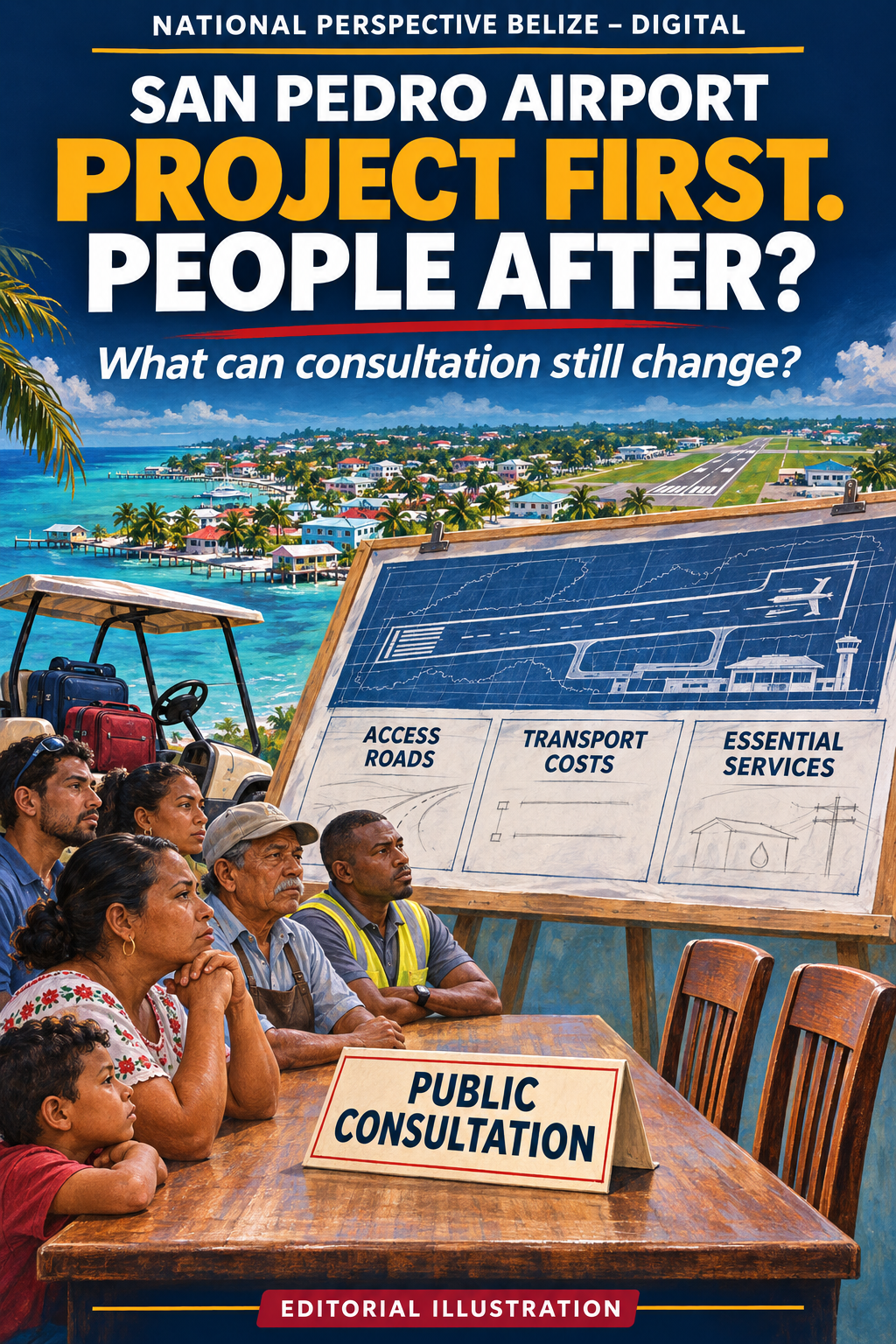
New statements from the mayor and area representative sharpen the question: are public needs shaping the airport proposal, or are residents being asked to adapt to a development ambition whose full consequences remain unexplained?
- San Pedro’s airport debate has moved beyond the question of where aircraft should land. It now concerns the order in which government makes decisions.
Public development planning should begin with an openly stated problem and early engagement with the people affected. Technical studies, cost comparisons and consultation should inform one another before government makes commitments that restrict the available choices. Residents need enough information to judge the options, and officials must explain how their input influences the decision.
- When a project is promoted before that complete case is publicly demonstrated, people are entitled to ask whether the tail is wagging the dog.
- That is an editorial judgment about the process. It is not proof that officials have secretly sold public land or selected private beneficiaries.
The mayor draws a distinction
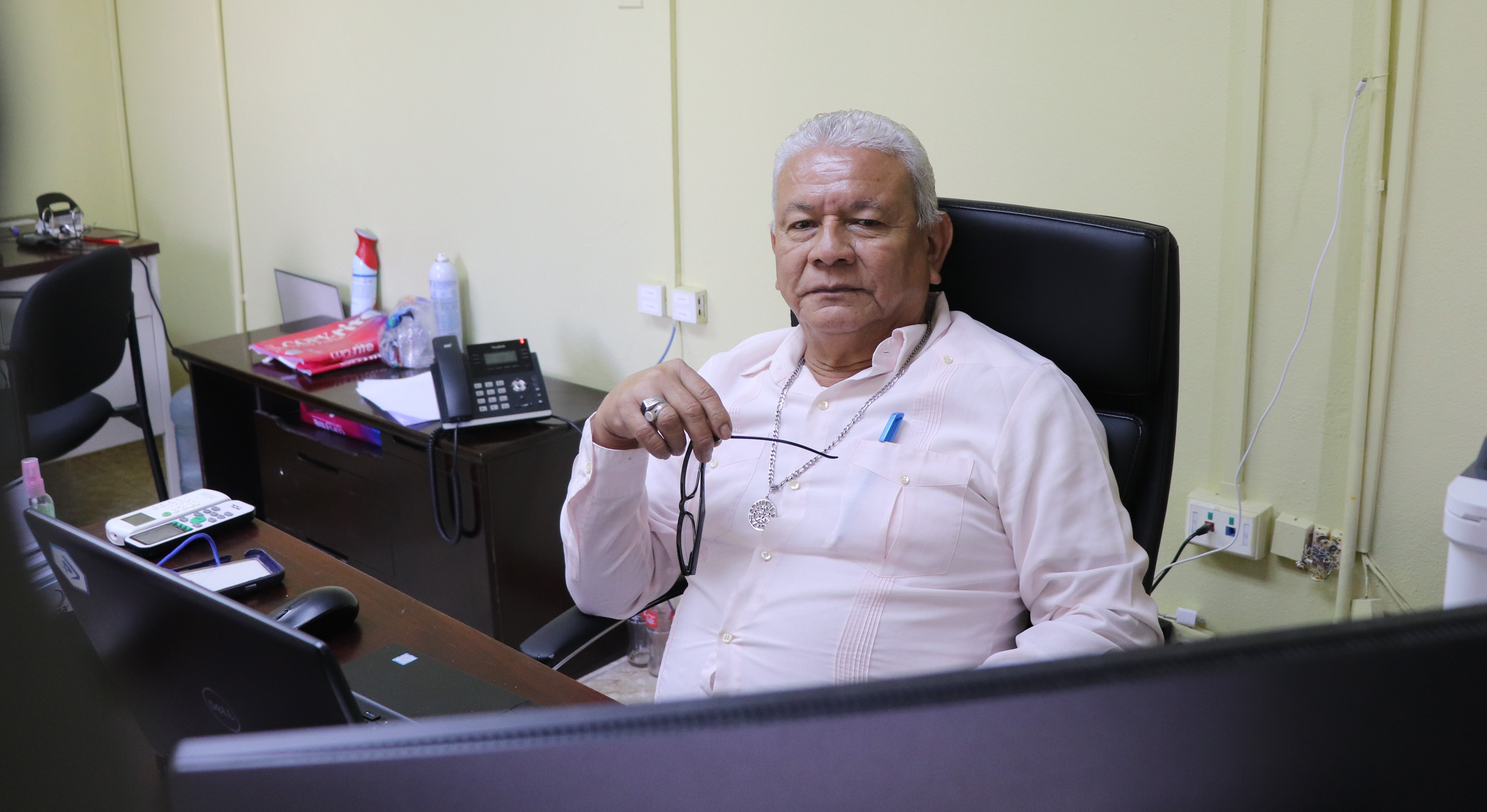
In his November 5 interview with Local media Mayor Gualberto Nuñez distinguished support for considering northern airport development from opposition to closing the existing municipal runway at present. He also raised the potential damage to downtown businesses if economic activity shifts north.
- That gives municipal weight to the concern previously raised by Tropic Air CEO Max Greif: the location of the arrival point matters to the businesses, workers and communities around it.
- The mayor further acknowledged that phasing out the existing airport and selling its land to help finance the northern facility had appeared as a recommendation or idea. He did not describe an agreed sale.
The public therefore deserves the documents showing how that option entered the proposal, its financial importance, and what alternatives were assessed.
Consultation on what, and when?
- The mayor says stakeholder consultation helped develop the wider strategic plan. Area Representative Andre Perez now emphasizes further consultation and the need for feasibility and cost-benefit work.
- Those statements leave a specific question unanswered: were affected people clearly consulted on closing the existing airport, potentially disposing of its land, and changing the cost and pattern of passenger access?
Consultation on an island strategy does not, by itself, establish agreement to those consequences.
- The Briceño Government should publish the options presented, meeting records, objections and responses. It should explain what remains open to change.
- The timing also matters. Perez’s renewed emphasis follows public opposition and the council’s formal stance. That sequence warrants scrutiny; it does not establish his private motive or prove that consultation never occurred.
Meaningful consultation must allow residents to influence the outcome while choices remain available.
Can the people still change the decision?
- Government can legitimately bring a preliminary airport proposal to the community. Leadership includes developing options and explaining a preferred approach. But public endorsement of an ambition cannot substitute for the evidence needed to choose between alternatives.
Once political leaders attach their authority and reputation to a particular project, changing course can become harder. That creates a risk that consultation will be used to secure acceptance of the preferred outcome. This is a concern about how decisions are made; it does not establish why any individual official acted.
- The question for Minister Perez and central government is direct: if the people are still being consulted, which parts of the proposal can they still change?
- Can consultation change the site? Can it preserve the downtown airport? Can it change the financing model or rule out selling the existing airport land? Can the evidence lead government to improve present facilities instead, or defer a northern airport while essential services are addressed?
Those questions need written answers. Government should publish what is provisional, what has been authorized, what contractual or financial commitments exist, and what process will determine the final decision.
- It should also publish a consultation report recording the principal objections, alternatives proposed and reasons for accepting or rejecting them. A meeting held is a procedural event. Demonstrating how the evidence and public input affected the outcome is the measure of meaningful participation.
National Perspective Belize's demand is therefore clear: disclose the need and full costs, consult on real alternatives, and justify the decision before commitments make those alternatives impractical. This is the standard we advocate for responsible government, rather than a claim that every element is already an express legal requirement for this proposal.
A runway requires a complete journey
- The existing NP feature examined central congestion, golf-cart travel, airport transfers and downtown livelihoods. The new statements make publication of a complete access plan more urgent.
- Greif’s estimate of a journey two hours north remains an attributed claim, not an independently measured time. Local concerns about poor access deserve investigation. The reviewed evidence does not establish that no road proposal exists.
The distinction matters: government may have a proposed road without a functioning road, and may have a concept without secured construction funding.
- Authorities should resolve that uncertainty by publishing the selected site, access alignment, engineering status, budget, financing and completion schedule.
- Golf-cart dependence makes the passenger question especially practical. How will families with baggage travel in rain? What arrangements will serve older passengers and people with disabilities? How will workers reach early shifts? What happens after a delayed flight?
No verified future transfer fare has been established. Government must calculate and disclose the likely cost under identified transport arrangements rather than leave passengers to discover it after relocation.
- A new runway also requires drainage, water, electricity, sanitation, emergency access and maintenance. These belong in the project’s full cost.
The financial model changes if the old airport stays
- One question follows directly from the mayor’s acknowledgement of a possible land-sale financing idea: if both airports remain operational, how would the northern facility be financed?
- Any model that relies on redevelopment proceeds must be tested without them. Operating two facilities would also require assessment of maintenance, staffing, safety and traffic allocation.
This does not show that two airports are unaffordable. It shows why government must publish alternatives rather than ask the public to accept an unexplained package.
Protect the town while planning the north
- Relocation could release land for better street connections, public facilities and open space. Retaining the runway would preserve aviation access but require other measures to address congestion. Intensive redevelopment could introduce additional trips.
These are different choices with different consequences. Each needs traffic, environmental and economic assessment.
- The north also needs a funded settlement and services plan. Opening another growth area without that foundation risks reproducing the service gaps already documented in the World Bank’s August 2024 appraisal-stage project document. That risk is NP’s analysis, not a World Bank assessment of the airport proposal.
Put public needs in charge
The governing test should be whether the complete proposal improves mobility, services, safety and livelihoods at a defensible cost.
- If land redevelopment or ambitions for larger aircraft begin determining what residents must accept before that test is met, the priorities have been reversed.
- This is also a useful standard for examining other government projects. Each must be judged on its own evidence: what problem does it solve, what alternatives were considered, what recurring costs follow, and who benefits?
For San Pedro, the immediate demand is concrete. Publish the studies, infrastructure program, financing alternatives, consultation record and proposed treatment of the existing airport land. Government should refrain from commitments that would foreclose the alternatives while that public examination remains incomplete.
Government should demonstrate that the project serves the island. Islanders should not have to reorganize their lives around a project whose full public case they have yet to see.
By: Omar Silva – Editorial Director/Publisher @ www.nationalperspectivebz.com
National Perspective Belize – Digital | ©
- Log in to post comments
