Fifty Years Later — Still Asking for More Help?
By: Omar Silva – Editor/Publisher
National Perspective Belize – Digital 2026
Belize City: Thursday 26th February 2026
Fifty years after the formation of the Caribbean Community (CARICOM), Caribbean leaders gathered once again under bright lights, diplomatic ceremony, and global attention.
The milestone summit in St. Kitts and Nevis was described as historic.
The theme promised action.
The speeches invoked courage.
Yet one phrase echoed too familiarly across the microphones:
“We need more help.”
When John Briceño spoke about Belize’s vulnerability to transnational cartels, he was correct. Belize is small. Our borders are fragile. The Kaborka cartel’s proximity is real and next to the Corozal Free Zone.
But here lies the uncomfortable question:
After fifty years of regional integration — why are we still structurally unprepared?
The Pattern We Refuse to Confront
At nearly every CARICOM summit over the past decades, the script has been consistent:
- We need more intelligence support.
- We need more training.
- We need more equipment.
- We need more access.
- We need more funding.
- We need more concessions.
And the major powers respond with:
- Technical assistance.
- Capacity-building programs.
- Security packages.
- Strategic dialogue.
But where is the regional architecture?
Where is the Caribbean-owned security doctrine backed by pooled funding and unified strategy?
Where is the CARICOM Joint Security Infrastructure that reduces dependence instead of institutionalizing it?
Dependence Masquerading as Cooperation
Security cooperation with the United States is necessary. That is not the issue.
The issue is structural imbalance.
If every major security challenge — narcotics, migration, weapons trafficking — requires external intervention to stabilize, then fifty years of integration have not translated into collective capacity.
- We have built secretariats.
- We have convened summits.
- We have issued communiqués.
- But have we built autonomous capability?
Or have we built expectation?
Sovereignty — But at What Depth?
CARICOM leaders routinely emphasize sovereignty. Prime Minister Andrew Holness rightly reminded the summit that national sovereignty must remain paramount.
But sovereignty is not declared.
It is demonstrated.
Sovereignty means:
- Regional intelligence pooling that functions independently.
- Maritime surveillance funded collectively.
- Unified border technology frameworks.
- Integrated procurement systems.
- Shared training academies.
Instead, we continue negotiating bilaterally for assistance.
That is cooperation — yes.
But it is not strategic independence.
The Economic Contradiction
CARICOM speaks of economic resilience.
Yet regional manufacturing integration remains weak.
Food import bills remain staggering.
Energy dependence persists.
Financial de-risking continues to threaten correspondent banking relationships.
Security is not only about guns and gangs.
It is about economic insulation.
If economic vulnerability remains high, security dependence follows naturally.
The Venezuela and Cuba Discussions
When Marco Rubio defended Washington’s actions regarding Venezuela, Caribbean leaders reportedly expressed concern.
That is healthy.
Dialogue matters.
But here is the deeper truth:
If CARICOM had a fully articulated regional doctrine on hemispheric intervention norms, its voice would carry greater weight.
Right now, it reacts.
It does not define.
Fifty Years — What Have We Built?
Fifty years should produce institutions that reduce vulnerability.
Instead, we remain:
- Highly exposed to external economic shocks.
- Dependent on foreign intelligence streams.
- Vulnerable to cartel spillover.
- Financially constrained.
- Climate fragile.
This is not an indictment of current leadership alone.
It is an indictment of regional complacency over decades.
The Courage Question
St. Kitts and Nevis Prime Minister Dr. Terrence Drew said history will judge leaders not for convening meetings, but for courage.
That courage must include self-examination.
Are we:
- Integrating deeply enough?
- Pooling sovereignty where necessary?
- Investing regionally instead of nationally?
- Reforming CARICOM’s decision-making structures?
- Funding regional security independently?
Or are we still hoping that stronger external partnerships will compensate for internal underdevelopment?
A Necessary Maturity
Asking for help is not weakness.
Remaining structurally dependent after fifty years is.
If CARICOM wants equal partnership with global powers, it must first demonstrate collective capacity.
Security cannot be outsourced permanently.
Integration cannot remain incremental indefinitely.
And sovereignty cannot be rhetorical.
The Hard Truth
This summit may be historic.
But unless it produces:
- A regional security funding mechanism,
- A joint maritime operational framework,
- A unified economic resilience strategy,
- And measurable integration benchmarks,
Then fifty years later, we will still be asking for more help.
And hoping it comes fast enough.
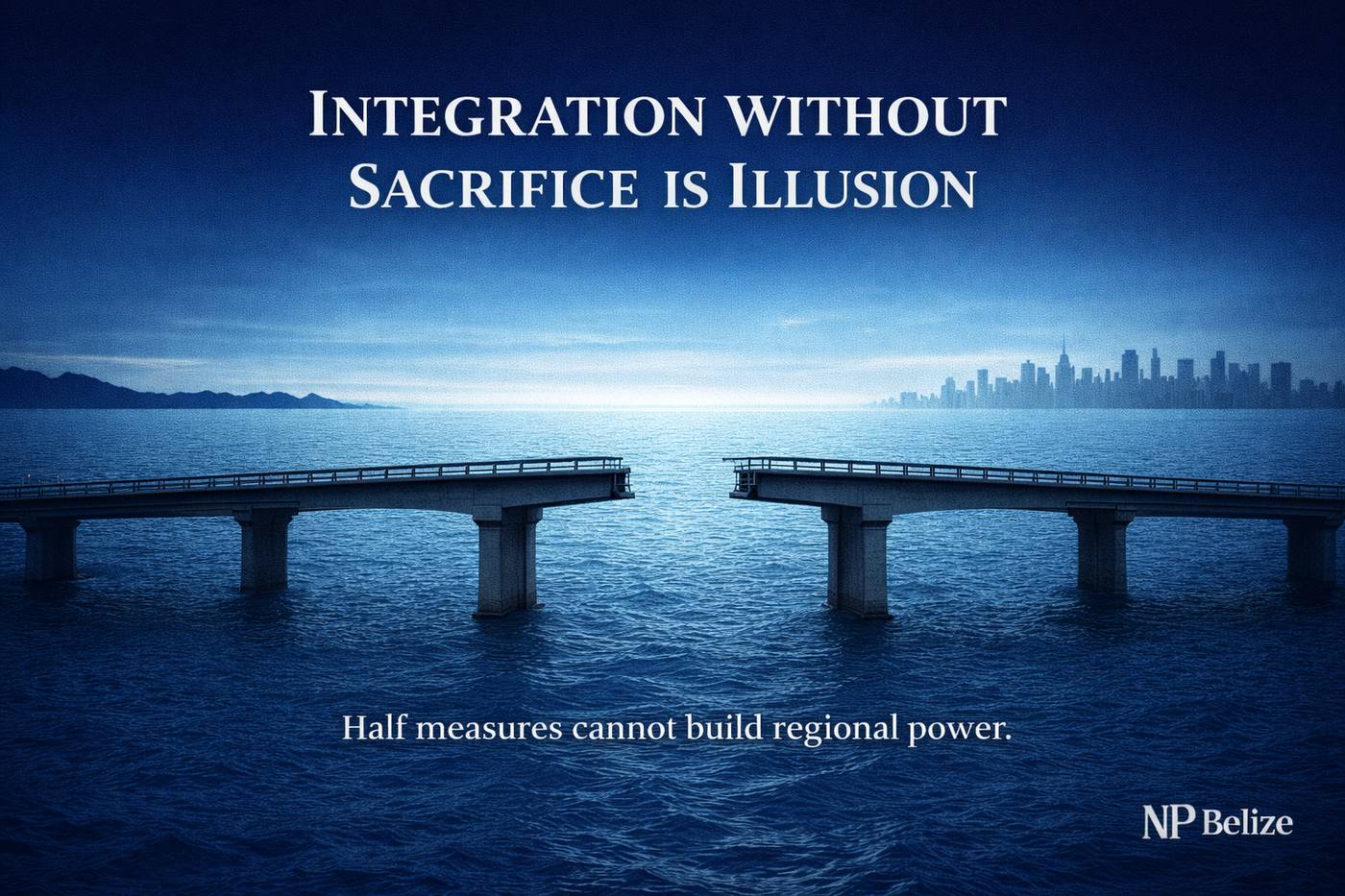
“Integration Without Sacrifice Is Illusion.”
- Log in to post comments