“Crony Capitalism at the Speed of Light: Inside the BTL–SMART Takeover and the Collapse of Public Trust”
By: Omar Silva – Editor/Publisher
National Perspective Belize - Investigative Desk
Belize City | February 2, 2026
📰 FEATURE ARTICLE
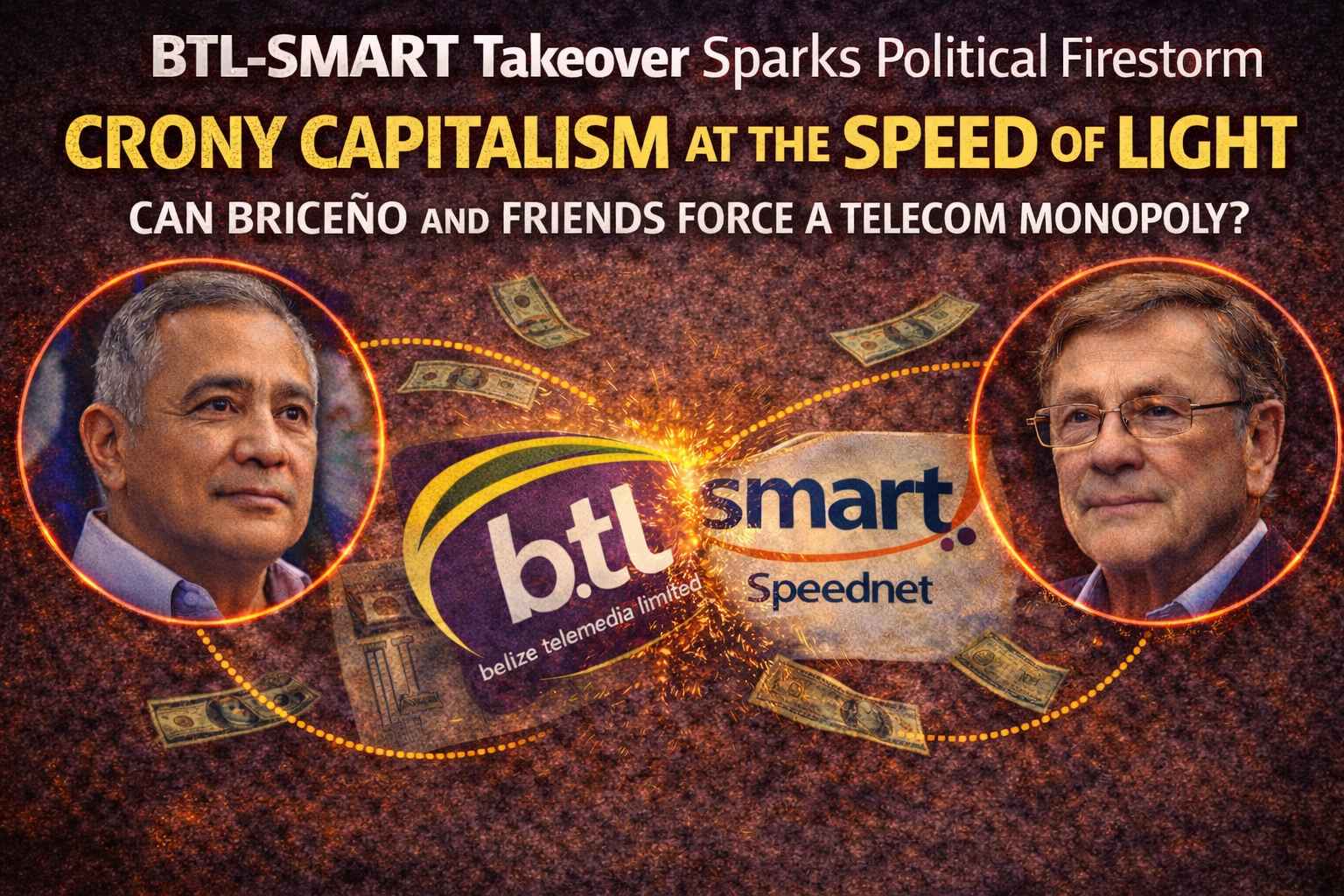
The proposed acquisition of Speednet Communications Ltd. (SMART) by Belize Telemedia Limited (BTL) has ignited a political firestorm, laying bare deep divisions within Cabinet, intensifying public outcry, and crystallizing what many now see as the return of “crony capitalism”—this time with the full weight of Prime Minister John Briceño’s Office and his Northern Caucus allies behind it.
The backlash isn’t limited to political opposition. The National Trade Union Congress of Belize (NTUCB) has demanded full transparency and has now threatened to mobilize public protests, targeting the Social Security Board (SSB)—which owns a 34% stake in BTL—urging it to halt the deal until all stakeholders are satisfied. The Belize Communications Workers for Justice (BCWJ), representing over 130 former BTL employees, has joined the resistance, spotlighting the company’s alleged refusal to pay court-ordered severance. Their press conference last Monday, January 26, carried out a rallying cry against injustice in both labour and policy.
Musa Speaks — But Briceño Pulls the Strings
In what many now interpret as an attempt to distance himself from political fallout, Minister Kareem Musa has acknowledged the risks of the proposed acquisition and welcomed public protests as “a sign of healthy democracy.” Yet he remains careful not to directly criticize the Prime Minister or the Northern Caucus, who have not only endorsed the BTL–SMART deal but have now bypassed Cabinet’s “no political interference” understanding.
In a stunning rebuke, Minister Julius Espat, Chair of the Public Accounts Committee, broke ranks publicly, condemning the Northern Caucus for issuing an unauthorized press release in support of the acquisition. Espat reiterated that such interference disrespects public consultation and lends credence to widespread fears that this deal would usher in a telecommunications monopoly, reversing decades of gains in competitive pricing and media pluralism.
The Hidden Agenda: Monopolization for Political Control?
Critics, including UDP Leader Tracy Taegar Panton and opposition senators, argue the deal reeks of backroom maneuvering designed to consolidate control over Belize’s telecommunications infrastructure. With BTL already the largest player, absorbing SMART would hand the Briceño administration unchecked influence over broadband access, mobile communication, and potentially digital surveillance—especially as biometric and e-governance systems come online.
But the political risks may already be outpacing the rewards. The Cabinet is fractured, with clear lines drawn between the Briceño loyalists—such as Jose Mai, Florencio Marin Jr., and Thea Garcia—and dissenters like Espat, Musa, Fonseca, and Usher. Minister Cordel Hyde’s absence during this debacle has not gone unnoticed and raises questions about whether he is silently dissenting or being sidelined.
Consumers, Workers, and Democracy Left in the Dark
This isn’t just a boardroom battle or a squabble among political elites. Consumers face the risk of rising telecom costs, journalists fear shrinking press independence, and workers demand justice after decades of service without proper compensation. The very institutions created to safeguard public interest—the SSB, the BTL Board, and the Cabinet—are now at the center of a storm they helped create.
With NTUCB protests pending and civil society agitated, the Briceño administration faces a critical juncture. Will they retreat from the brink of monopoly, or will they push forward, steamrolling the people they were elected to serve?
- Log in to post comments