Belize Between Two Futures: What Changing Military Alliances in Central America Mean for Our National Security
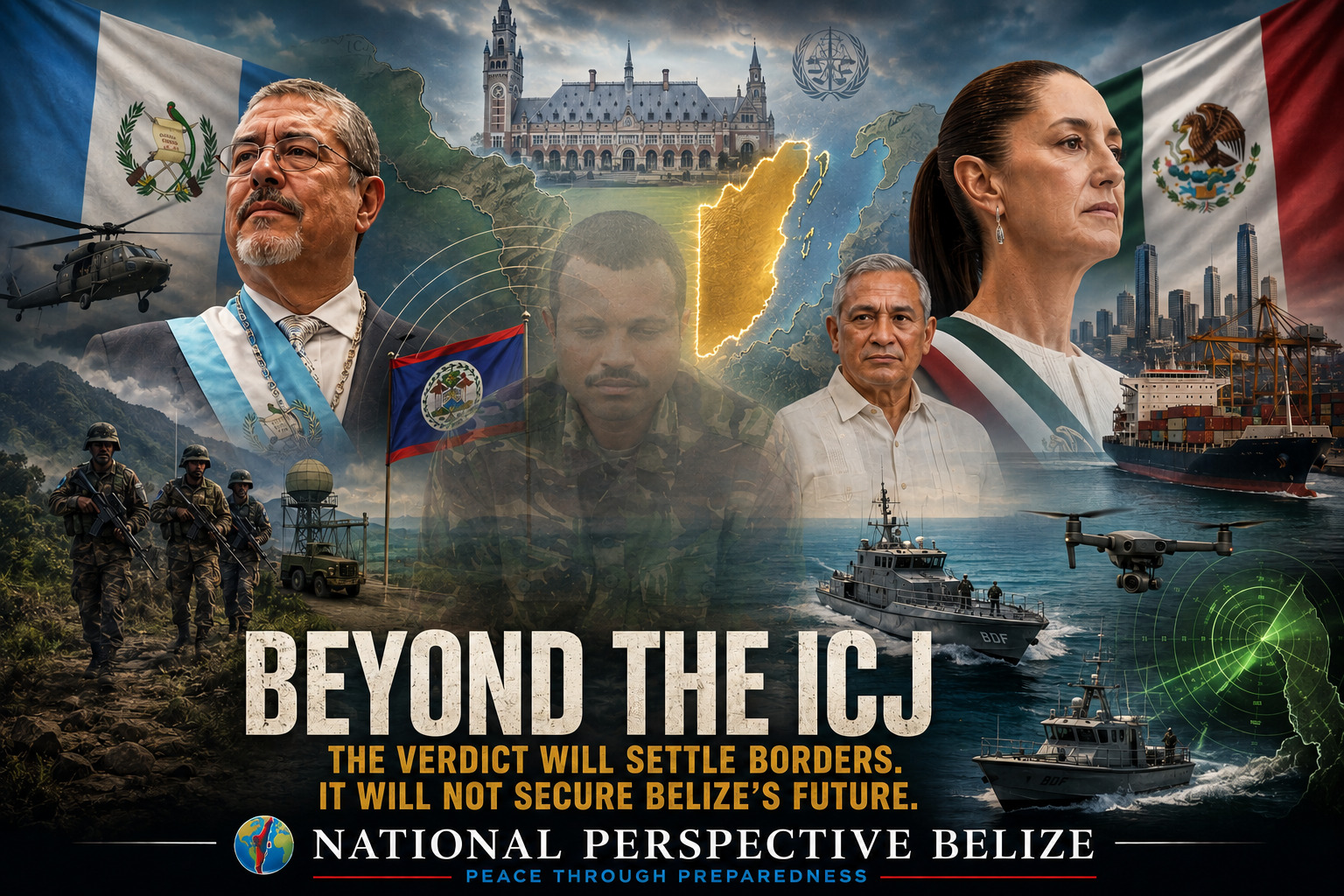
Belize City: Saturday, 30 May 2026: For decades Belize has lived under the shadow of Guatemala's territorial claim.
Many Belizeans grew accustomed to thinking that the dispute was frozen in time, awaiting a legal verdict from the International Court of Justice.
But while Belize waits for that judgment, the region around us is changing.
New military partnerships are emerging.
New geopolitical rivalries are taking shape.
And Guatemala itself is deepening military cooperation with the United States at a moment when Mexico and Washington are experiencing growing tensions over trade, migration, sovereignty, and security.
The question Belizeans should be asking is not whether war is coming.
The question is whether Belize is adequately prepared for a changing strategic environment regardless of how the ICJ eventually rules.
Guatemala Is Not The Guatemala Of Twenty Years Ago.
Guatemala possesses the largest military establishment in Central America.
It maintains:
- The region's largest standing armed forces.
- Air assets.
- Naval assets.
- Special forces.
- Expanding intelligence capabilities.
- Increasing international military cooperation.
Now President Bernardo Arévalo has formally requested expanded U.S. military assistance involving training, intelligence, equipment, and operational support against narcotics trafficking. While Arévalo has denied that U.S. combat operations or permanent troop deployments are being authorized, the cooperation itself represents a significant strengthening of Guatemala's military capabilities.
For Belize, geography matters.
Regardless of intentions, a stronger and more capable Guatemala inevitably changes the strategic balance on Belize's western frontier.
The ICJ Case Exists In A Different Reality.
Belizeans often discuss the ICJ dispute as if it exists in isolation.
It does not.
The territorial claim is being decided in a world experiencing:
- Great power competition.
- Expanding military alliances.
- Migration crises.
- Drug trafficking wars.
- Resource competition.
- Economic fragmentation.
The ICJ will eventually issue a binding judgment regarding Guatemala's territorial, insular and maritime claim against Belize. The dispute remains before the Court and oral proceedings are expected as the process advances.
Yet regardless of the legal outcome, geography will remain unchanged.
Belize and Guatemala will continue to share a long border.
The relationship between both nations will continue long after judges in The Hague render their decision.
The New Strategic Triangle.
What is emerging today is a triangle that deserves attention:
Guatemala
Increasing military cooperation with Washington.
Mexico
Firmly resisting direct foreign military operations on its territory while maintaining cooperation through intelligence and law enforcement channels.
Belize
A small nation directly between major regional interests, with a pending territorial case before the ICJ and limited military resources compared to larger neighbors.
This places Belize in a uniquely sensitive position.
The Most Important Question.
The most important question for Belize is not whether U.S. soldiers arrive in Guatemala tomorrow.
President Arévalo has denied such reports.
The real question is:
What happens if Guatemala's military capabilities, intelligence systems, surveillance capacity, logistics networks, and international partnerships continue expanding over the next decade while Belize's security planning remains largely unchanged?
That is a legitimate national security question.
It is also a legitimate public policy question.
What Should Belize Be Doing?
Rather than fear, Belize requires preparation.
A mature national conversation should focus on:
1. Modernizing National Defence
The Belize Defence Force cannot be organized solely around doctrines developed decades ago.
Technology, surveillance, drones, cyber-security, and maritime awareness now matter as much as troop numbers.
2. Strengthening Diplomacy
Belize must maintain strong relations with:
- Guatemala
- Mexico
- CARICOM
- SICA
- The Commonwealth
- The United States
No single relationship should define Belize's foreign policy.
3. Building National Consensus
The ICJ decision should never become a partisan issue.
Whatever the outcome, Belize will need national unity.
4. Investing In Border Communities.
The strongest frontier is not merely military.
It is economic.
Strong border communities create national resilience.
Conclusion.
Belize today stands at a historic crossroads.
To the west, Guatemala is strengthening its military partnerships.
To the north, Mexico is asserting its sovereignty against external pressures.
Across the region, geopolitical currents are shifting in ways not seen since the Cold War.
Meanwhile, the ICJ case moves steadily toward its eventual conclusion.
Belize cannot control the decisions made in Washington, Guatemala City, or Mexico City.
But Belize can control how seriously it prepares for the future.
The verdict from The Hague will determine legal boundaries.
The choices Belize makes today will determine whether the nation enters that future strong, prepared, and confident—or merely hoping that geography and goodwill alone will protect it.
That is the conversation Belizeans should begin having now.
By: Omar Silva – Editor/Publisher
National Perspective Belize – Digital
- Log in to post comments