When People Stop Voting, It Is Not Apathy—It Is an Indictment
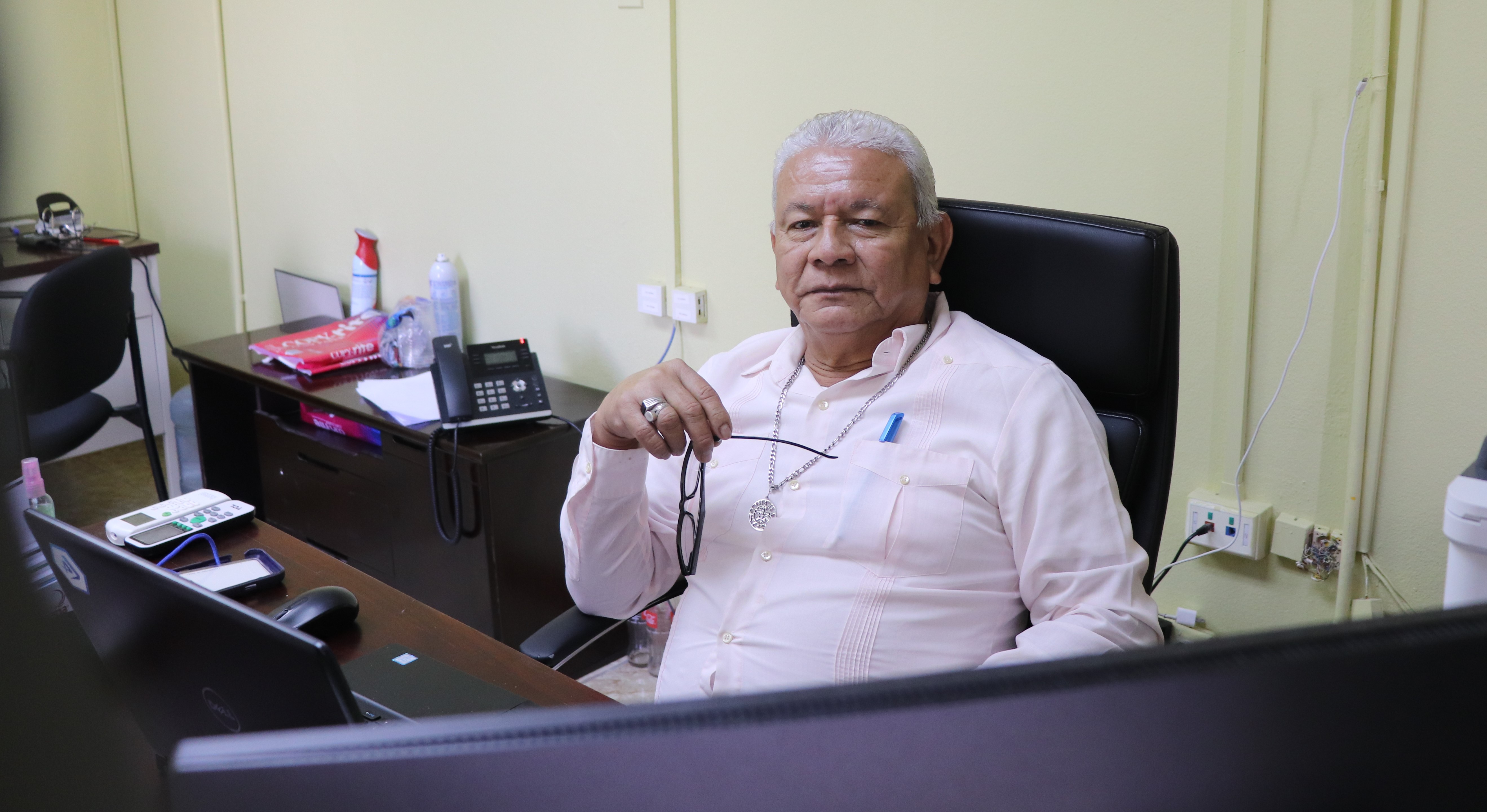
By: Omar Silva = Editor/Publisher
National Perspective Belize – Digital 2026
Belize City: Friday 13th February 2026
EDITORIAL
For decades, politicians across the Caribbean have repeated the same convenient explanation whenever voter turnout declines:
“They are apathetic.”
But that explanation is not only lazy—it is dishonest.
People do not withdraw from democracy because they do not care.
They withdraw because they no longer believe.
And there is a difference.
Silence Is Not Indifference
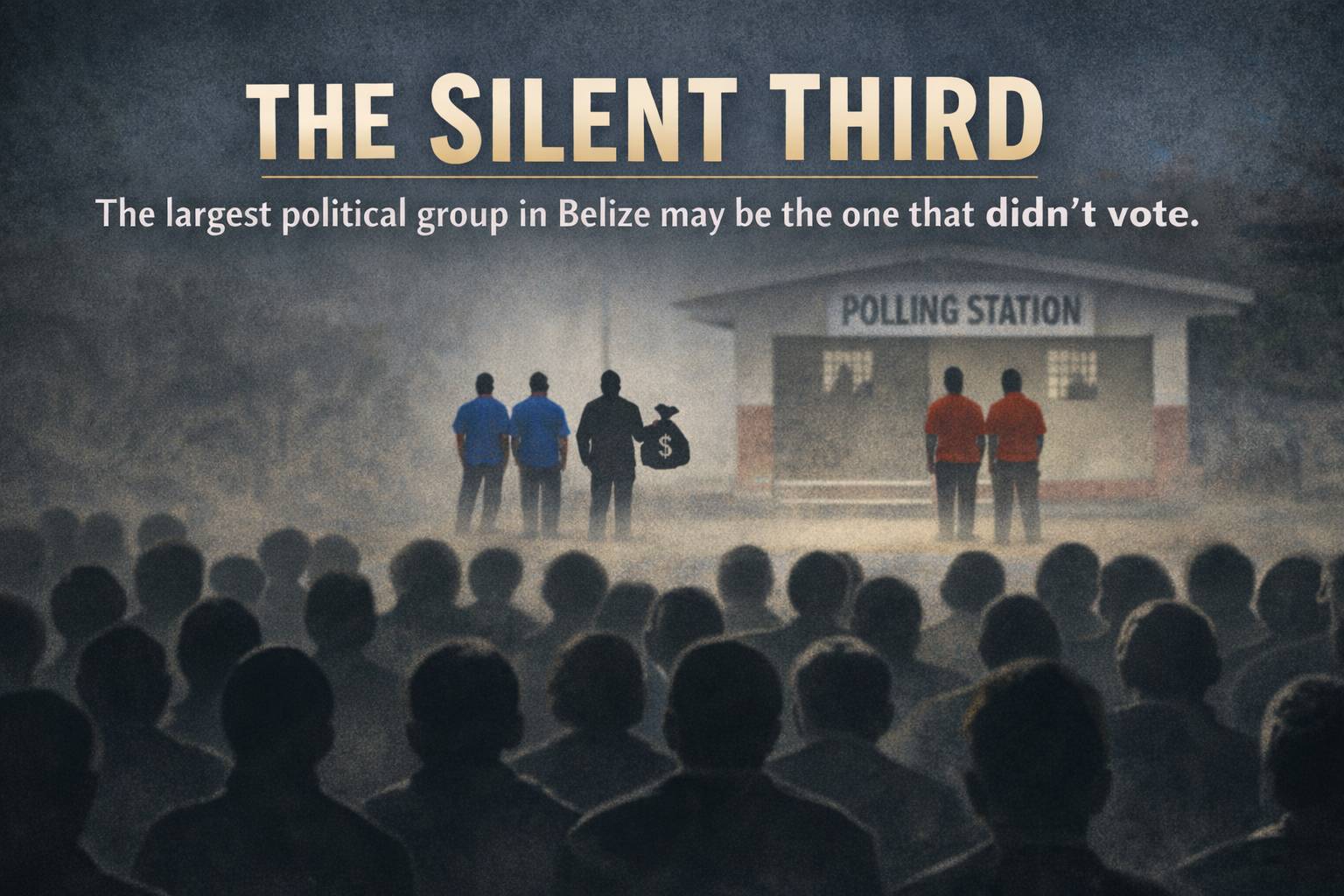
In Belize’s 2025 General Election, more than sixty-eight thousand registered voters did not go to the polls.
That is not a statistical footnote.
That is a political earthquake—one that few in authority seem willing to acknowledge.
These citizens did not march in the streets.
- They did not riot.
- They did not protest.
They did something far more serious:
- They disengaged.
And disengagement is the quietest form of protest.
The Political Class Misreads the Moment
Both major parties continue to measure legitimacy in seats won, percentages gained, and mandates claimed.
But legitimacy is not measured only by who voted.
It is measured by how many people saw no reason to vote at all.
When a third of the electorate stays home, the message is not apathy.
The message is:
“We no longer expect anything to change.”
- That is not a failure of citizens.
- That is a failure of leadership.
Elections Without Transformation
Belizeans have watched governments change while daily realities remain stubbornly the same:
- The cost of living rises.
- Opportunities remain limited.
- Young people continue to leave.
- Production remains weak.
- Dependency deepens.
Election after election, the faces change.
But the structure does not.
And people understand this more clearly than politicians think.
Barbados Is a Warning, Not an Exception
The recent election in Barbados, where turnout collapsed dramatically despite a sweeping victory, should not be dismissed as an isolated case.
It is a signal of what happens when citizens begin to believe that outcomes are inevitable and participation is meaningless.
Belize is not there yet.
But the trend is visible.
And trends, if ignored, become realities.
The Most Dangerous Stage of Democracy
Democracy does not die only when ballots are stolen.
It also dies when ballots are ignored.
Not by governments—but by citizens who see no purpose in casting them.
That is the most dangerous stage of all, because it arrives quietly.
No tanks in the streets.
No constitutional crisis.
Just an empty polling station.
And a people slowly losing faith.
An Indictment, Not Apathy
Those who stayed home in 2025 were not all lazy.
They were not all indifferent.
They were not all uninformed.
Many were simply unconvinced.
- Unconvinced that politics speaks to their reality.
- Unconvinced that the system serves the nation.
- Unconvinced that voting alone can transform their lives.
And when citizens become unconvinced, democracy must listen—not lecture.
A Moment of Reflection
The correct response to declining participation is not celebration of victory.
It is reflection.
Because the day citizens stop believing in politics is the day politics loses its purpose.
And rebuilding that belief requires more than campaigns and slogans.
It requires transformation.
Real transformation.
Closing Line
People do not stop voting because they do not care.
They stop voting because they no longer believe.
And when belief disappears, no victory—no matter how large—can truly be called a mandate.
- Log in to post comments